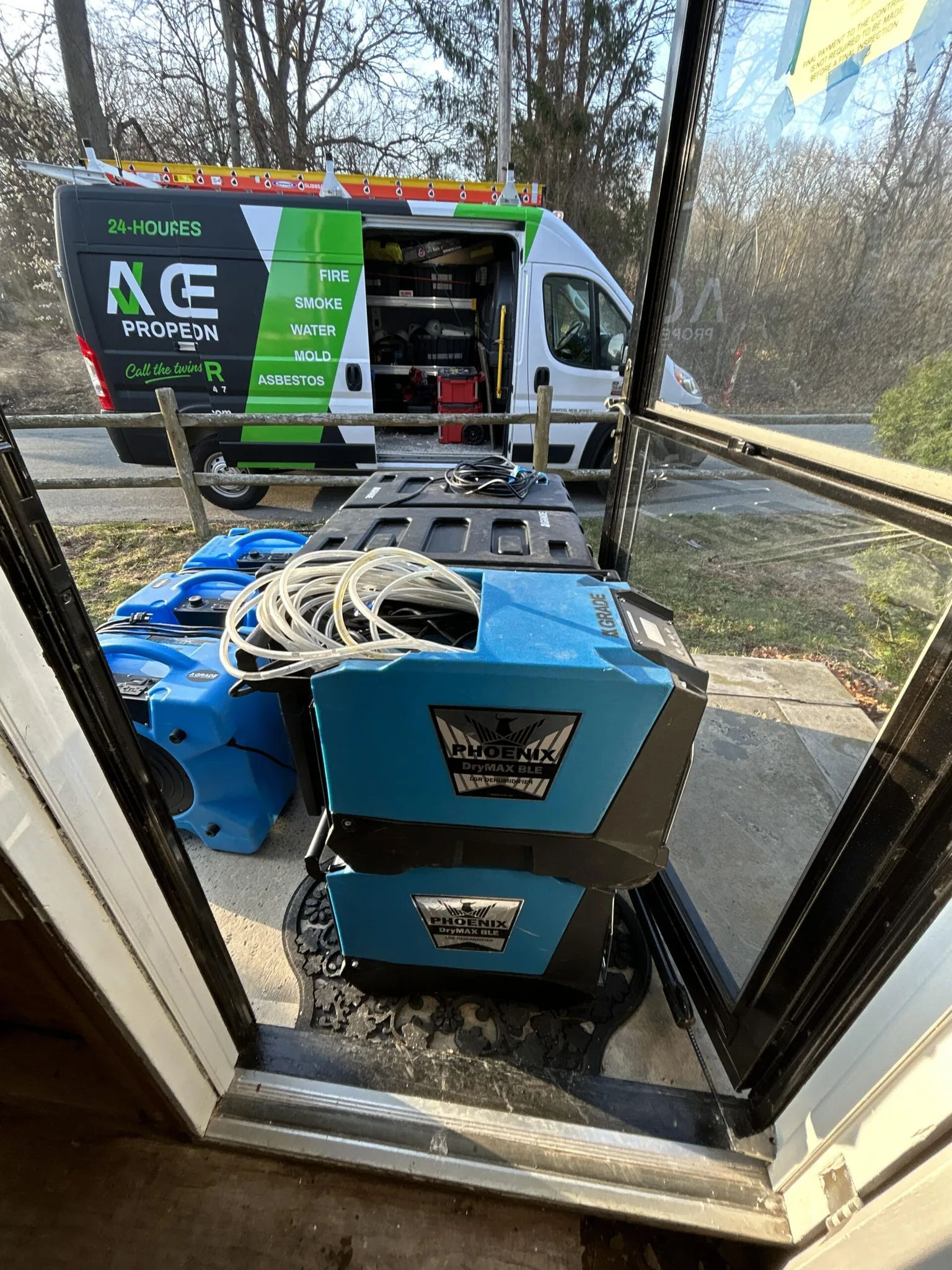
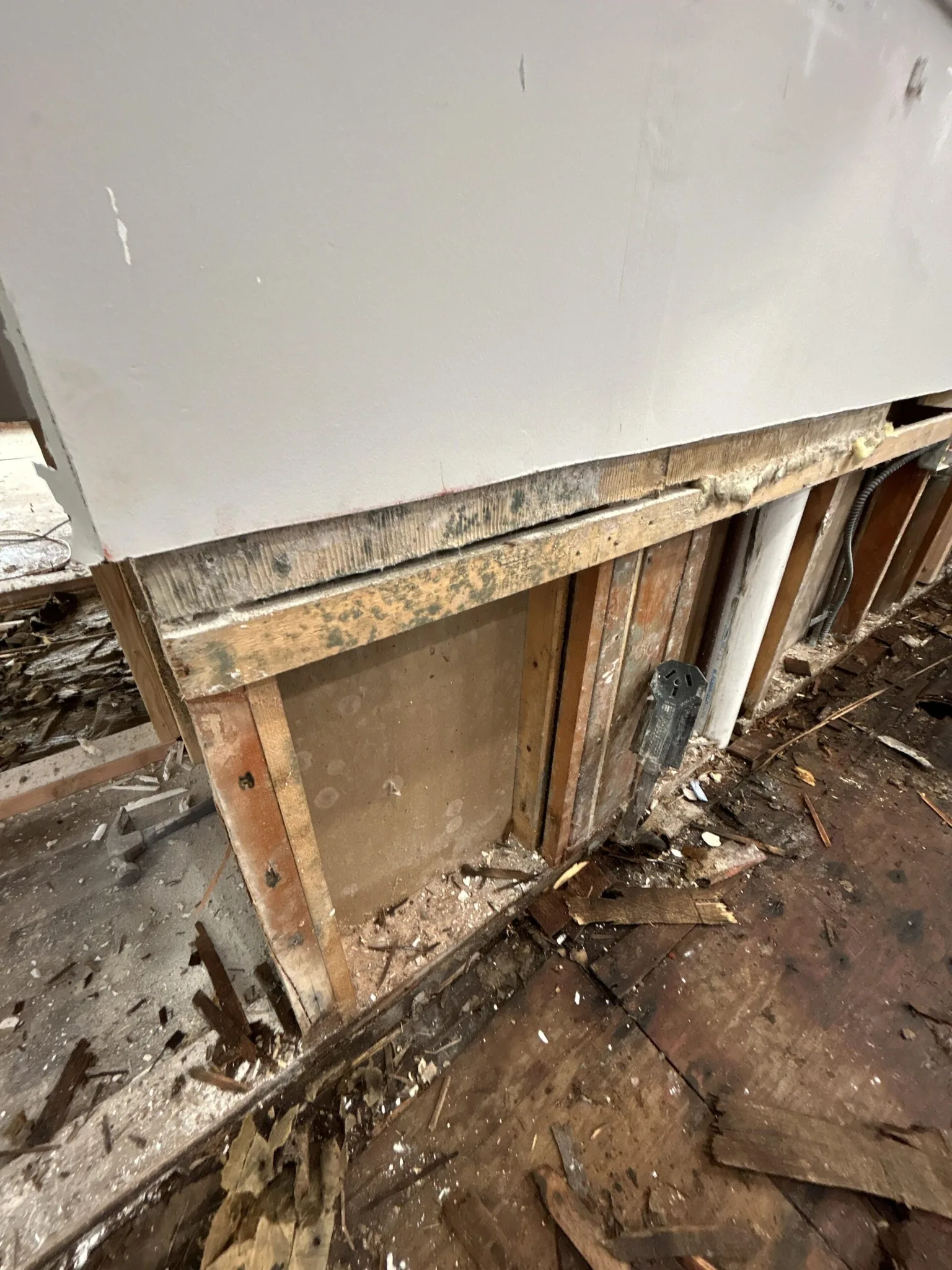
When water reaches a finished room in Randolph, protecting the materials underneath is as important as removing the visible water. We assess the wet areas, use extraction and drying equipment suited to the loss, and monitor progress before rebuilding damaged finishes. That sequence helps avoid covering a moisture problem with new flooring or drywall.
The handoff from drying to a finished room
Drying and reconstruction are connected stages. Moisture readings establish whether affected materials are ready, and the repair scope identifies the finishes that need replacement. We do not treat the removal of drying equipment as a substitute for evaluating the remaining work. The goal is a room restored on a sound basis, not just a surface that looks better.
What to do while help is being arranged
Stop the water source only if you can reach it safely. Stay out of standing water near electrical equipment, and avoid contact with suspected sewage or contaminated water. Do not enter a hazardous area to move belongings or take photographs.
If a plumber is handling a pipe or fixture failure, let us know what has been repaired. Source control stops new water; extraction and drying address the water already in your home. Notify your insurer promptly and keep records of the damage and emergency work.
From standing water to a dry building
Find the affected areas. We assess the loss and use moisture detection to identify wet materials, including areas beyond the obvious stain or puddle. The water conditions and materials guide the restoration approach.
Extract and dry. We remove standing water and use appropriate air movement and dehumidification to dry affected materials. Moisture monitoring shows progress and helps identify areas that still need attention. Contaminated water requires a different cleaning and handling approach from a clean-water leak.
Clean and repair. Cleaning or removal is completed as appropriate to the loss, and repairs follow the necessary drying. A GRADE also provides reconstruction, so damaged drywall, flooring, and other finishes can be addressed as part of the restoration project.
Why prompt action matters
Water can continue affecting materials after the leak stops. EPA recommends drying water-damaged areas and items within 24–48 hours to help prevent mold growth. Acting early is useful, but the condition of the building—not a clock alone—determines when drying is complete.
If the loss is older or mold is visible, tell us before work begins. That information changes the assessment and may require additional remediation. Covering a stain or replacing a finish without addressing moisture does not resolve the underlying problem.
A clear record of the damage and drying
A GRADE provides photographs, moisture readings, drying documentation, and estimates for the restoration work. These records explain the affected areas and the work performed. Save any plumbing invoices and note when the damage was discovered so the history of the loss stays clear.
Local service and recovery resources
A GRADE serves Randolph Township from its New Jersey office in Succasunna. For local construction and inspection contacts, use Randolph Township’s official website. The township’s requirements should be checked against the actual proposed work.
For rebuilding questions, the municipal website below is the starting point for construction and inspection contacts. Keep the property address and planned repair description available when contacting the appropriate office.
Call (973) 473-7247 for help with your Randolph property. Tell us what happened, the address, and whether there are any access restrictions. We will help you identify the next step, from emergency protection to cleanup and rebuilding.
A GRADE’s New Jersey office is at 17 NJ-10 Unit 1, Succasunna, NJ 07876. Emergency service is available 24 hours a day.
What should I do as soon as I discover water damage?
If you can safely reach the water supply without entering a wet or hazardous area, stop the source. Stay out of standing water near electrical equipment, and keep people and pets away from suspected sewage or contaminated water. Call for professional help, notify your insurer promptly, and take photographs from a safe position. Move undamaged belongings only when you can do so without entering the affected area.
Can walls and floors look dry while they are still wet underneath?
Yes. A surface can look normal while moisture remains behind drywall, under flooring, or in adjoining materials. A GRADE uses moisture detection and repeated readings to identify affected areas and follow drying progress. The decision to start repairs should be based on the condition of the materials, not just the disappearance of a stain or the absence of standing water.
Will wet drywall, carpet, or wood flooring have to be replaced?
Not always. Some materials affected by clean water can be dried if they remain sound, while swollen, deteriorated, or contaminated materials may need removal. The layers beneath a finish matter too: dry carpet does not establish that its backing or subfloor is dry. We assess the water conditions and each material before determining what can be retained and what needs replacement.
How long does drying take, and when can repairs start?
As a general planning range, a straightforward water loss often needs about three to five days of professional drying. Water inside walls, beneath floors, or in hard-to-reach spaces can take longer. Moisture measurements determine when drying is complete; repairs and replacement finishes add their own time afterward. This range is for drying, not a promise that the entire room will be restored within five days.
Are household fans enough to dry the damage?
Not necessarily. Air movement alone does not remove all the moisture from a building, and it may not reach wet cavities or flooring layers. Professional drying combines the appropriate equipment with measurements that show whether it is working. Do not run fans over suspected mold or contaminated water before assessment, because air movement can spread contaminants into otherwise unaffected areas.
Does homeowners insurance cover water damage?
The cause matters. Sudden accidental water damage may be covered, while repeated seepage, outside flooding, and sewer or sump backups can have different exclusions or coverage requirements. Standard homeowners coverage generally excludes flooding, and backup coverage may require an endorsement. A GRADE documents the damage and restoration work; your insurer applies your policy’s coverage, limits, and deductible to the claim.
What determines the cost of water damage restoration?
Cost depends on the affected area, water conditions, materials, extraction needs, drying equipment and monitoring, and the repairs required afterward. Water limited to an accessible hard surface is a different project from water beneath flooring or inside several walls. The estimate separates mitigation and drying from replacement finishes and reconstruction, making it easier to understand the work and compare what is included.
Can A GRADE repair the room after it has been dried?
Yes. We provide water mitigation and reconstruction, including repair of affected building finishes as part of the agreed project. Once drying and necessary cleaning or removal are complete, the work moves to restoring the damaged areas. That transition is important: new materials should not be installed over an unresolved leak or remaining moisture problem.
Can you restore a Randolph home without turning it into a full remodel?
Yes. Restoration focuses on the areas and materials affected by the loss. A contained problem does not automatically require renovating the entire home. Where damage extends behind finishes or into adjoining spaces, the assessment explains why additional work is needed. Elective upgrades can be kept separate from the restoration scope.